How to Repair a Gravel Driveway After Heavy Rain in Marion
What steps to take to restore a gravel driveway in Marion after a storm
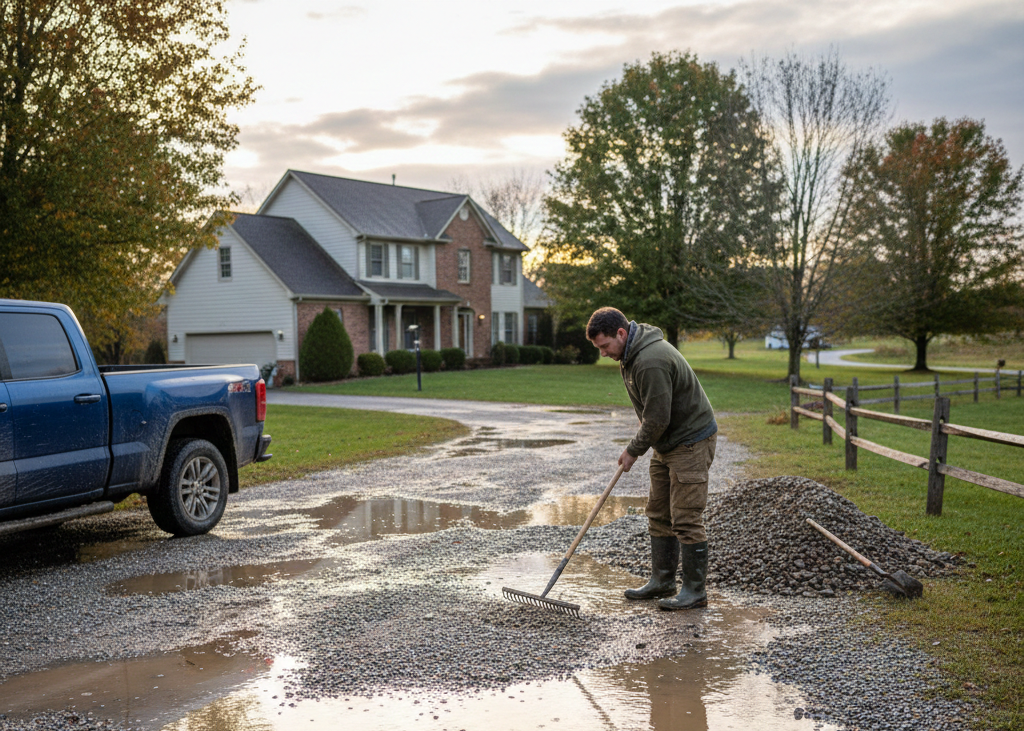
Nothing’s more frustrating than stepping outside after a heavy rain to find your gravel driveway carved into a mini riverbed. Puddles, ruts, and washed-away stones can make it tricky to drive—or even walk—safely. If ignored, these small annoyances can quickly turn into major headaches.
If you live in Marion, Illinois, you know just how quickly a storm can wreak havoc on your driveway. The good news? Most rain damage is fixable with a little know-how, some elbow grease, and a few smart steps. Here’s an easy, practical guide to bringing your gravel driveway back to life—without the stress.
1. Walk Your Driveway and Assess the Damage
Before you grab a shovel, stroll down your driveway and really look at what the rain did. Keep an eye out for:
- Washouts or tiny channels where water carved through the gravel
- Low spots where water likes to linger
- Bare patches where gravel got pushed aside
Think of this as your “damage report.” Knowing exactly what’s wrong will make the repair process faster and less frustrating.
2. Clear Away Mud, Leaves, and Debris
Heavy rain leaves a messy mix of mud, sticks, and leaves. Cleaning it up first is key:
- Sweep or rake away debris to reveal the gravel underneath
- Remove extra mud that could prevent new gravel from settling properly
A clean surface is the foundation for long-lasting repairs. Think of it like prepping a canvas: when the base is solid, everything else sticks perfectly.
3. Refill Washouts and Low Spots
Now comes the fun part: filling in the spots that took the biggest hit.
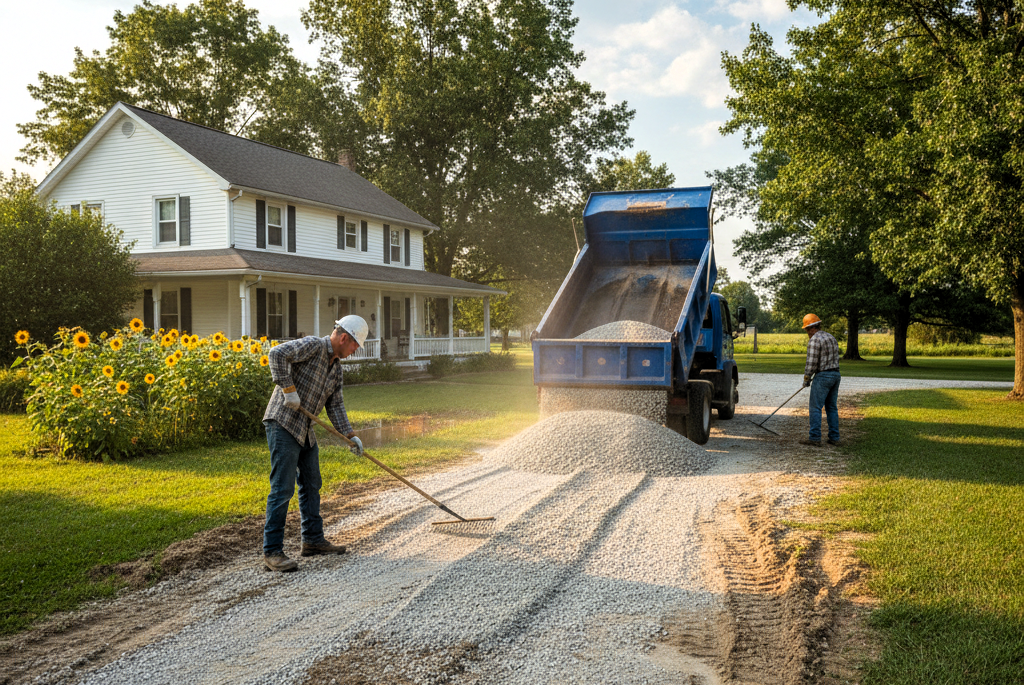
- Add gravel to ruts, holes, and bare patches. Make sure the new gravel is similar in size and color to what’s already on your driveway.
- Slightly overfill these areas—once you compact it, it will settle perfectly.
- Rake the gravel evenly to achieve a smooth, uniform driveway.
Taking a little time now can save a lot later. A well-filled driveway isn’t just prettier—it’s safer, sturdier, and easier on your car.
4. Re-Grade Your Driveway
Rain can subtly change your driveway’s slope, letting water pool or carve new channels. Fixing the grade now prevents problems later:
- Create a gentle crown in the center so water naturally flows to the sides
- Smooth the surface with a rake or grading tool
- Eliminate any channels that could direct water in the future
Proper grading might seem minor, but it makes a huge difference in preventing recurring washouts.
5. Address Drainage Issues
If water still pools after grading, it’s time to think about drainage:
- Small ditches or swales along the edges can guide water away
- For bigger problems, a French drain or culvert can protect your driveway from repeated erosion
Even simple drainage fixes now can save you hours of work later.
6. Compact the Gravel
Once the gravel is in place, packing it down is crucial:
- Use a plate compactor or hand tamper to press the gravel firmly
- Compacted gravel is less likely to shift, form ruts, or wash away
- Your driveway will be smoother, safer, and more durable
Consider it building a sturdy backbone for your driveway, keeping gravel and surfaces in order.
7. Protect Your Driveway from Future Rain Damage
Once the repairs are finished, a bit of regular maintenance can keep your driveway in great shape:
- Top off gravel in low-traffic or erosion-prone areas as needed
- Check drainage after every heavy storm
- Consider adding edging or stabilization grids for extra durability
These small steps help your driveway handle the next storm with minimal hassle.
8. Know When to Call the Pros
Some problems are bigger than a weekend DIY project:
- Large washouts or widespread gravel displacement
- Persistent water pooling despite your repairs
- Deep ruts that keep coming back
For homeowners in Marion, IL, Marion Gravel Driveways & Grading is a trusted choice for professional repair, grading, and gravel replacement. They’ll restore your driveway quickly and make sure it’s built to handle future storms.
Conclusion
A heavy rainstorm doesn’t have to mean a ruined driveway. With a careful inspection, some gravel, proper grading, and a little compaction, most Marion homeowners can get their driveways smooth, safe, and functional again.
The trick is acting quickly—fix those washouts and low spots before they worsen. And for bigger issues, professionals like Marion Gravel Driveways & Grading can make sure your driveway stays strong and ready for whatever Mother Nature throws at it.
Contact us today!
You might also like
Marion Gravel Driveways & Grading Blog